BLOG / WGTAKT: THE JOURNEY
WGTakt: the journey
A detailed case study of how a Weiden WG problem became a WhatsApp bot, then a mobile shared-home operating system with real screens, scheduler logic, notifications, finance, community, and Postgres history.
WGTAKT CASE STUDY
From one Weiden WG to a shared-home operating system.
WGTakt started because a real six-person WG could not keep chores, money, vacations, reminders, events, and room decisions in sync with a calendar or a generic chore app. The first answer was a WhatsApp bot. The durable answer became a mobile app with a backend that owns the house logic.
- Origin
- Weiden WG, 2023+
- Bot test
- WhatsApp bot + GPT routing
- Mobile repo
- 330 commits
- DB model
- 80 table definitions
ACTUAL APP SCREENS
PROJECT ARCHIVE
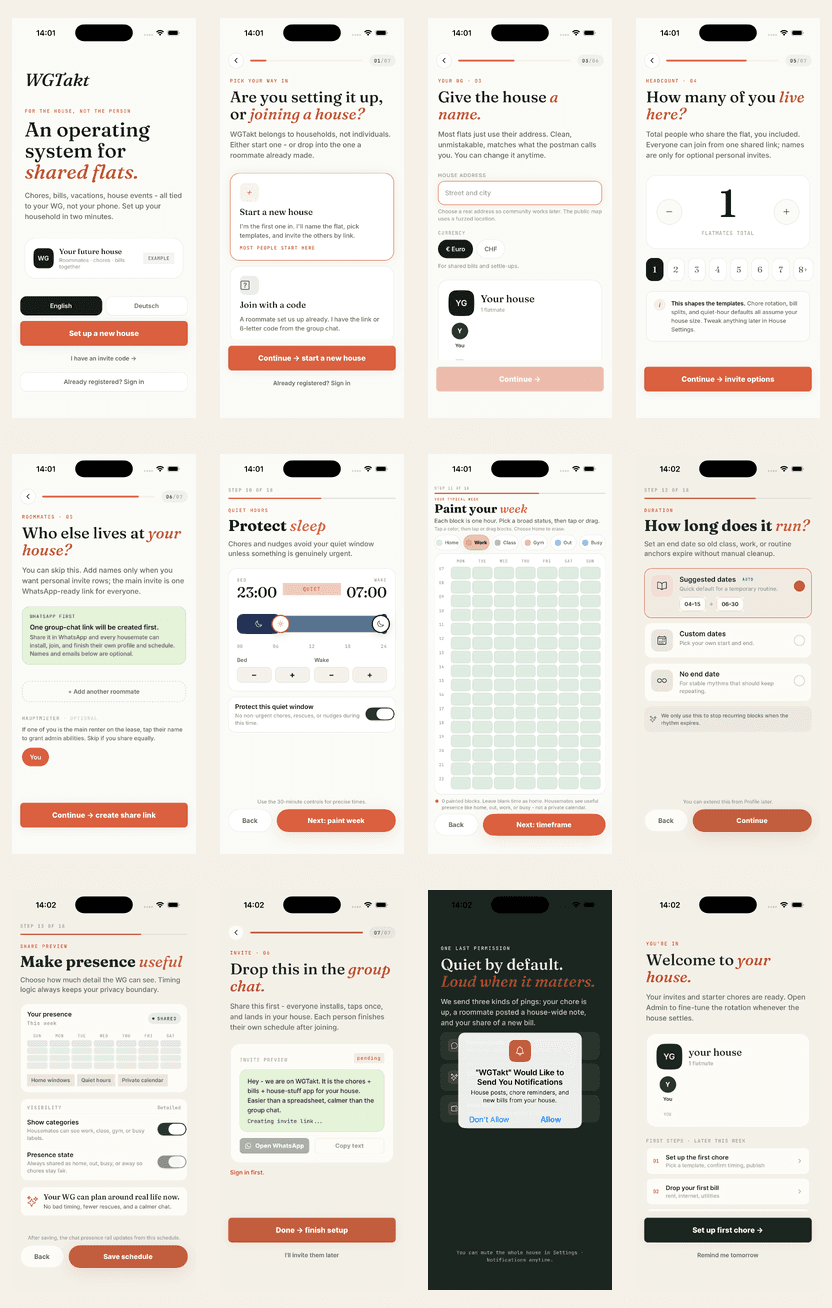
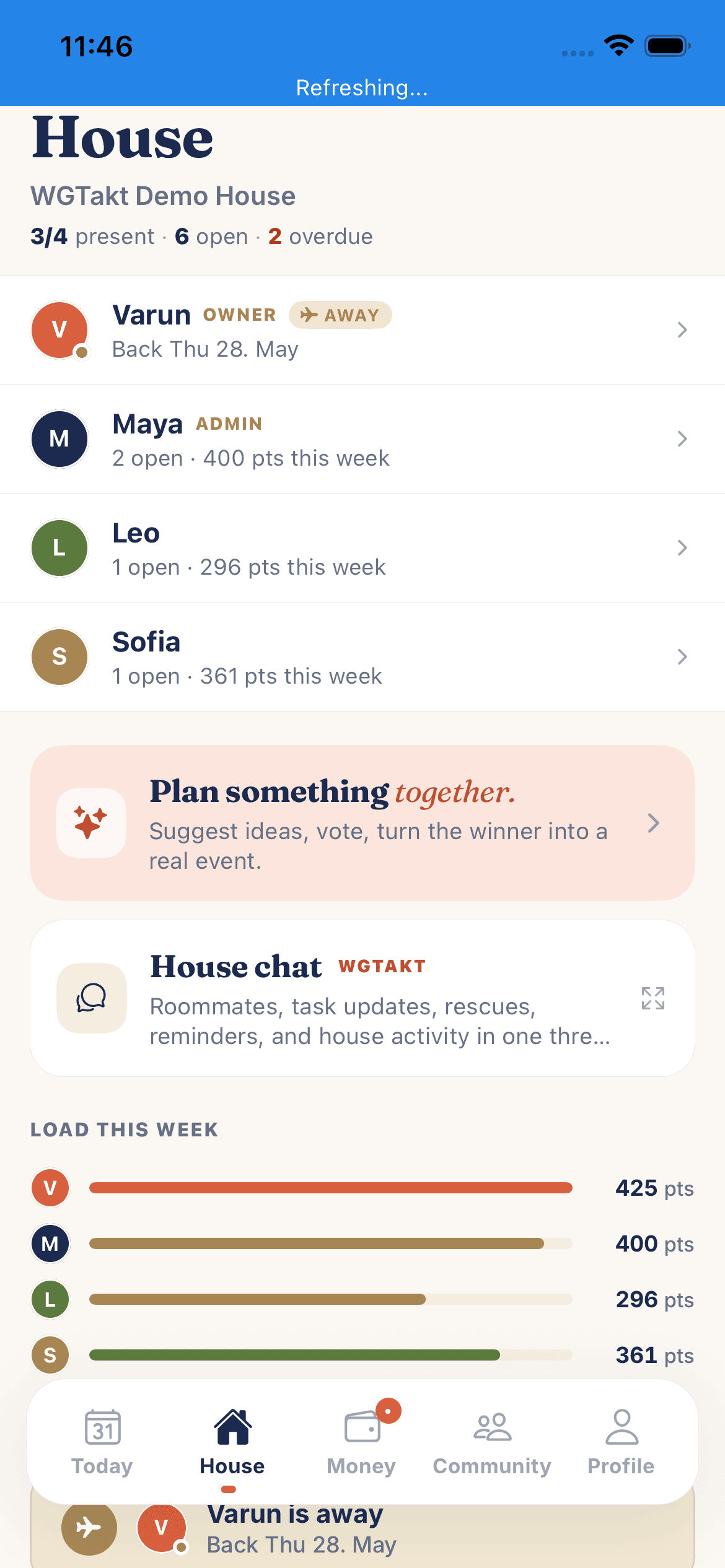
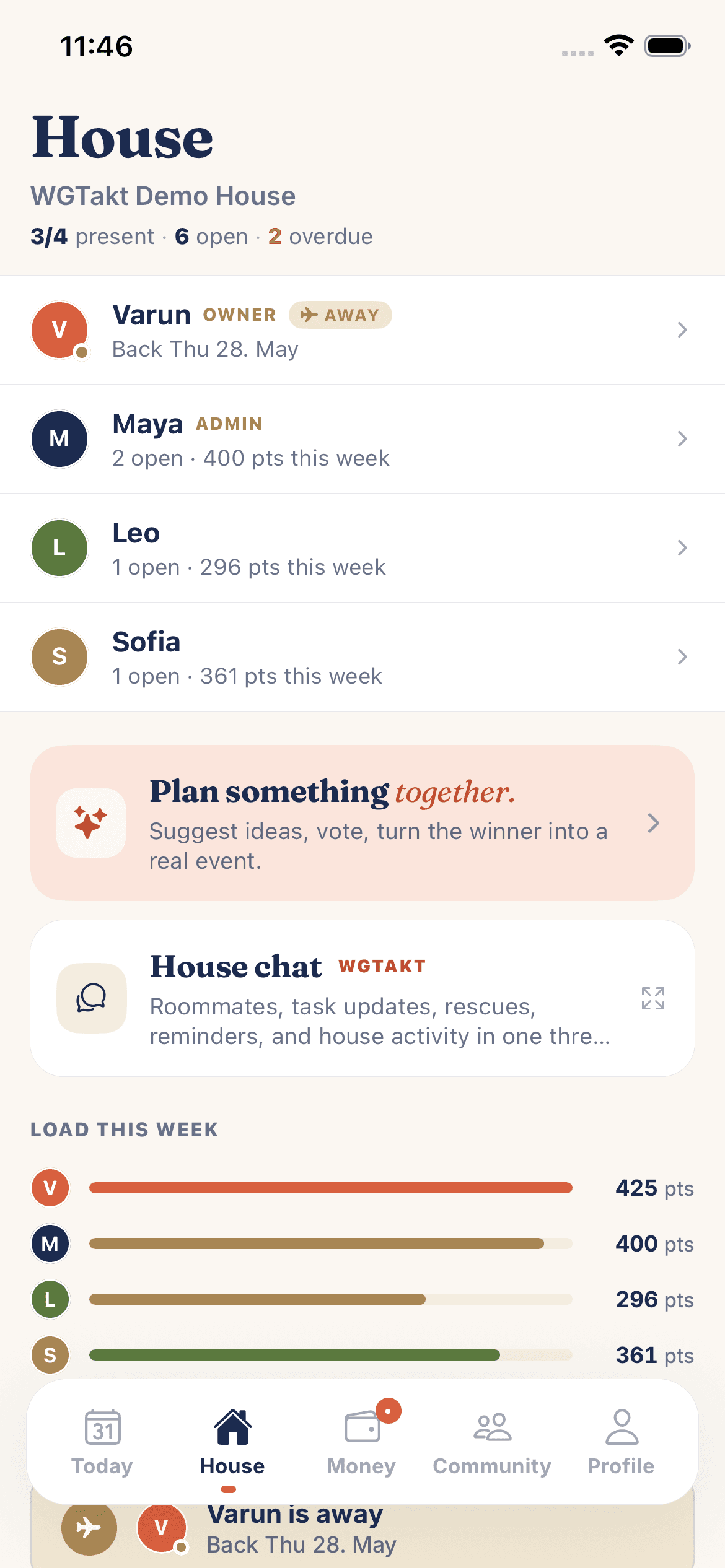
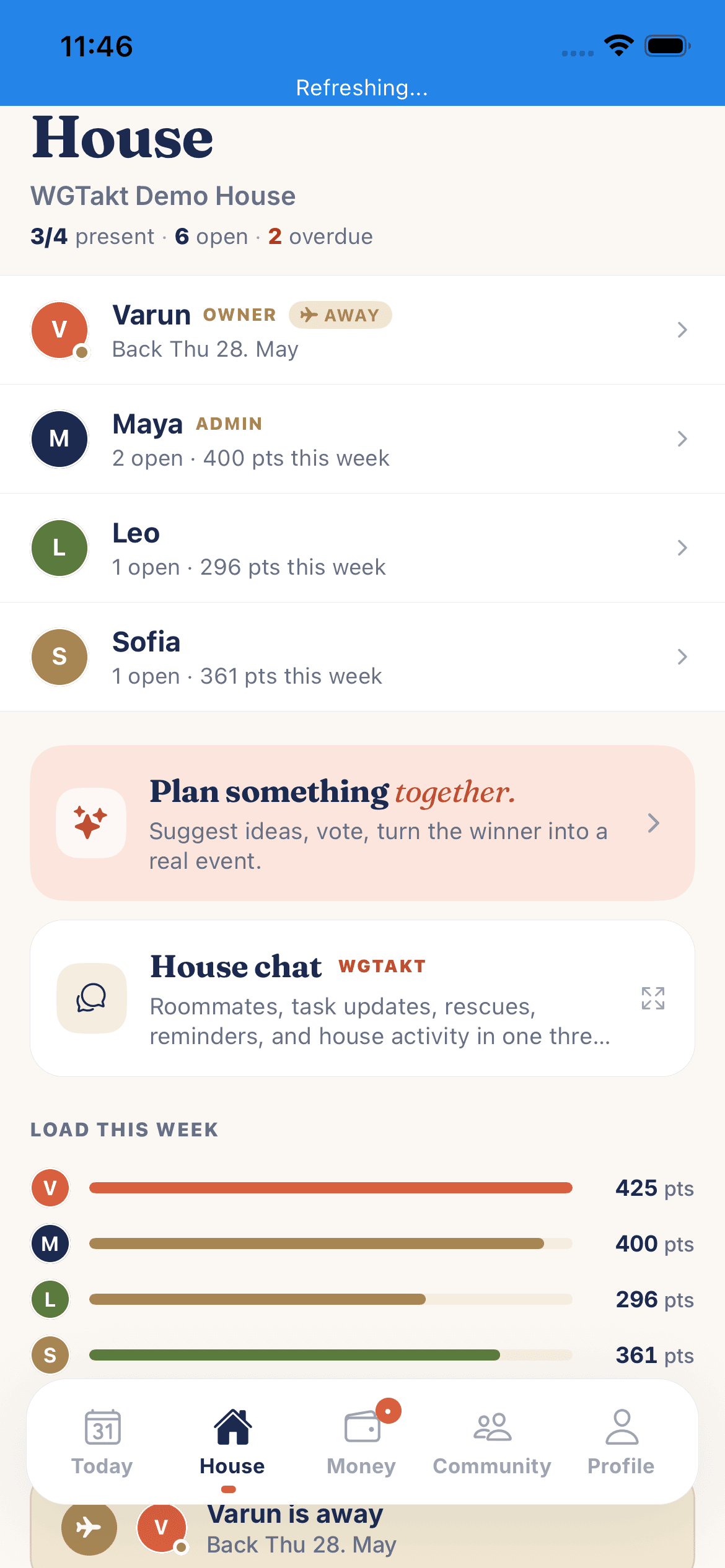
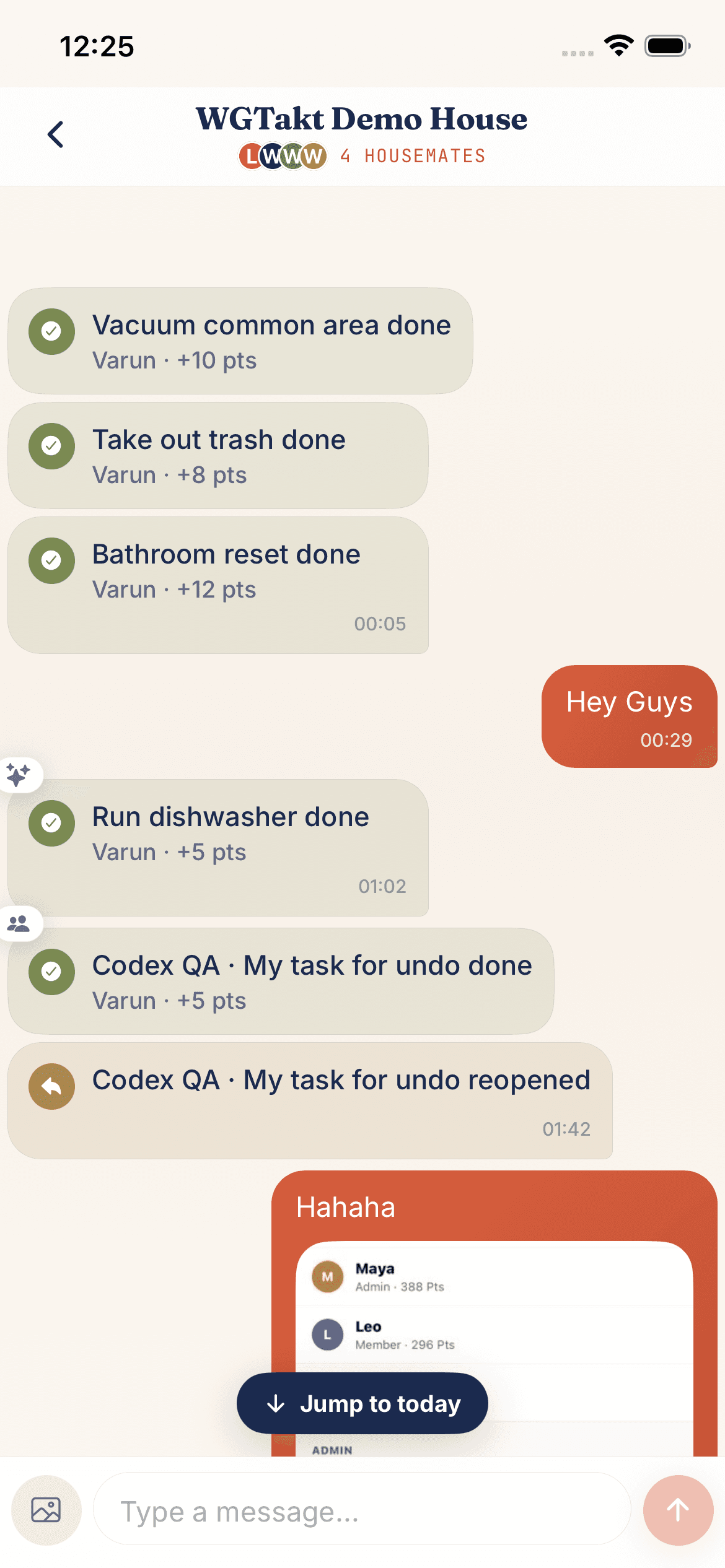
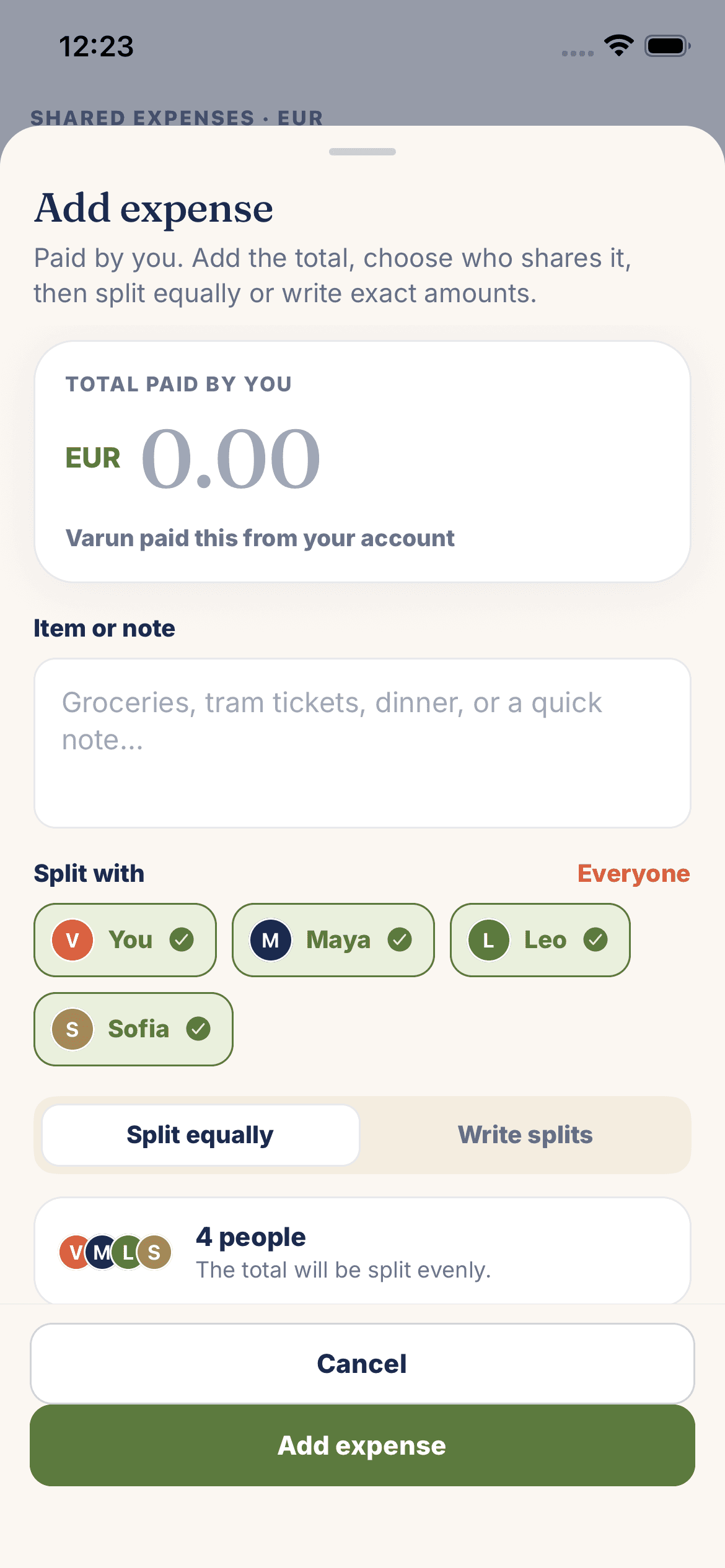
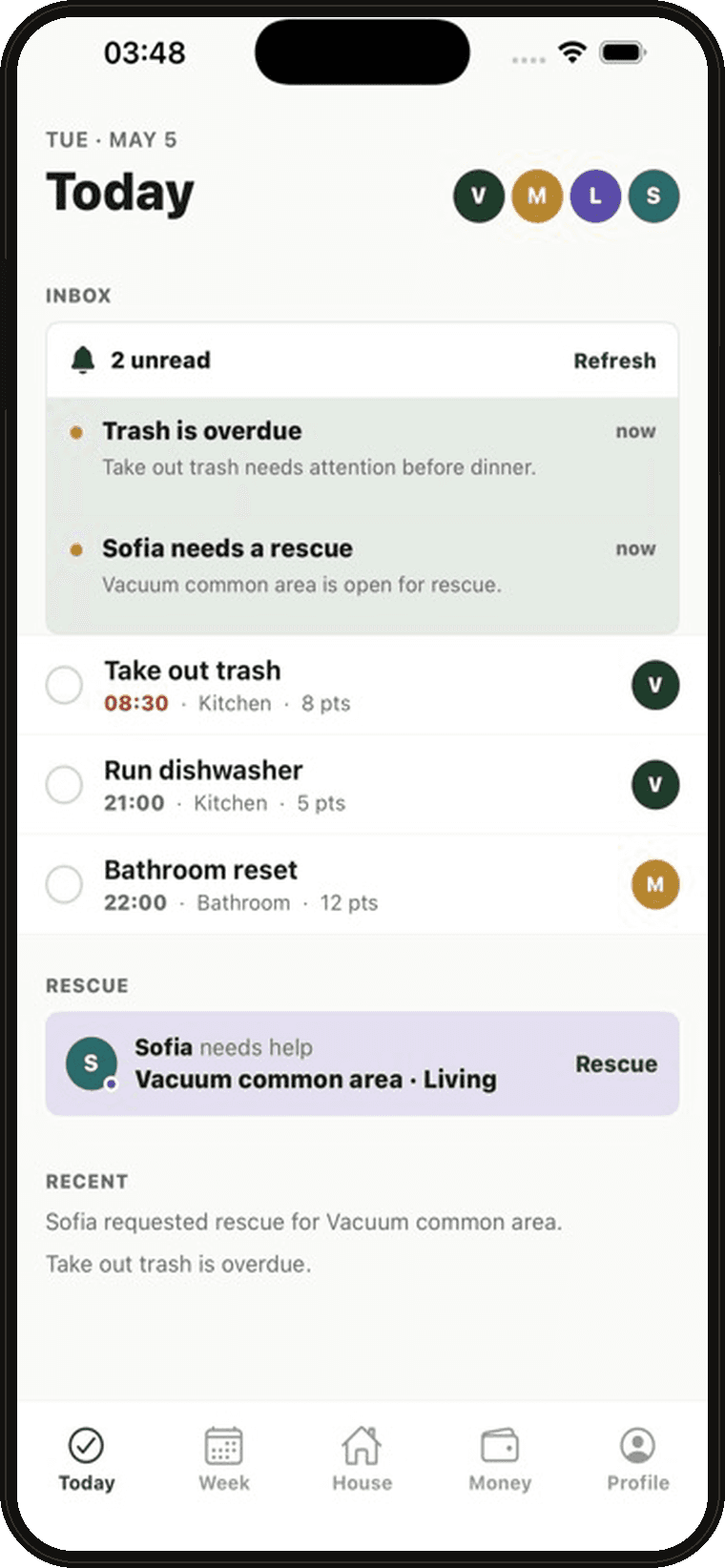
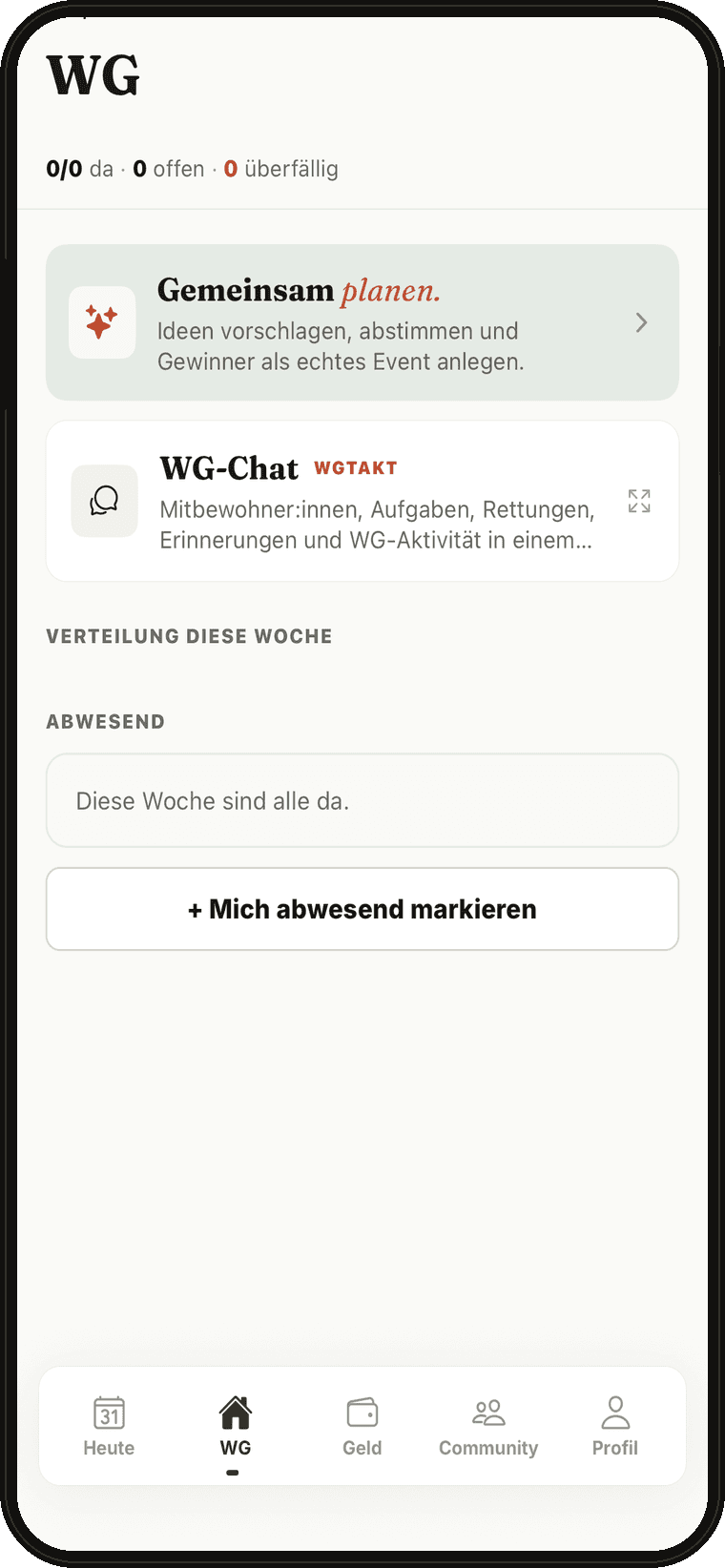
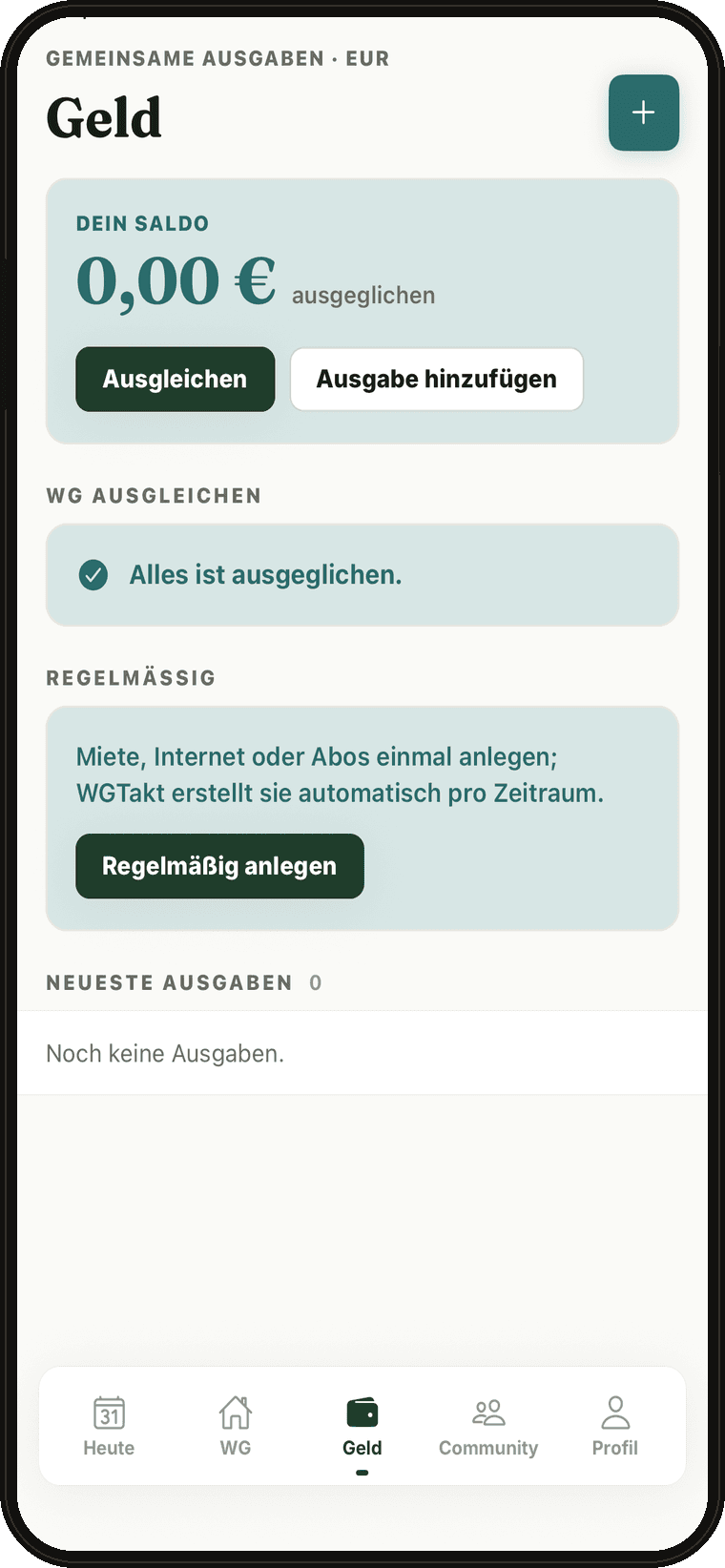
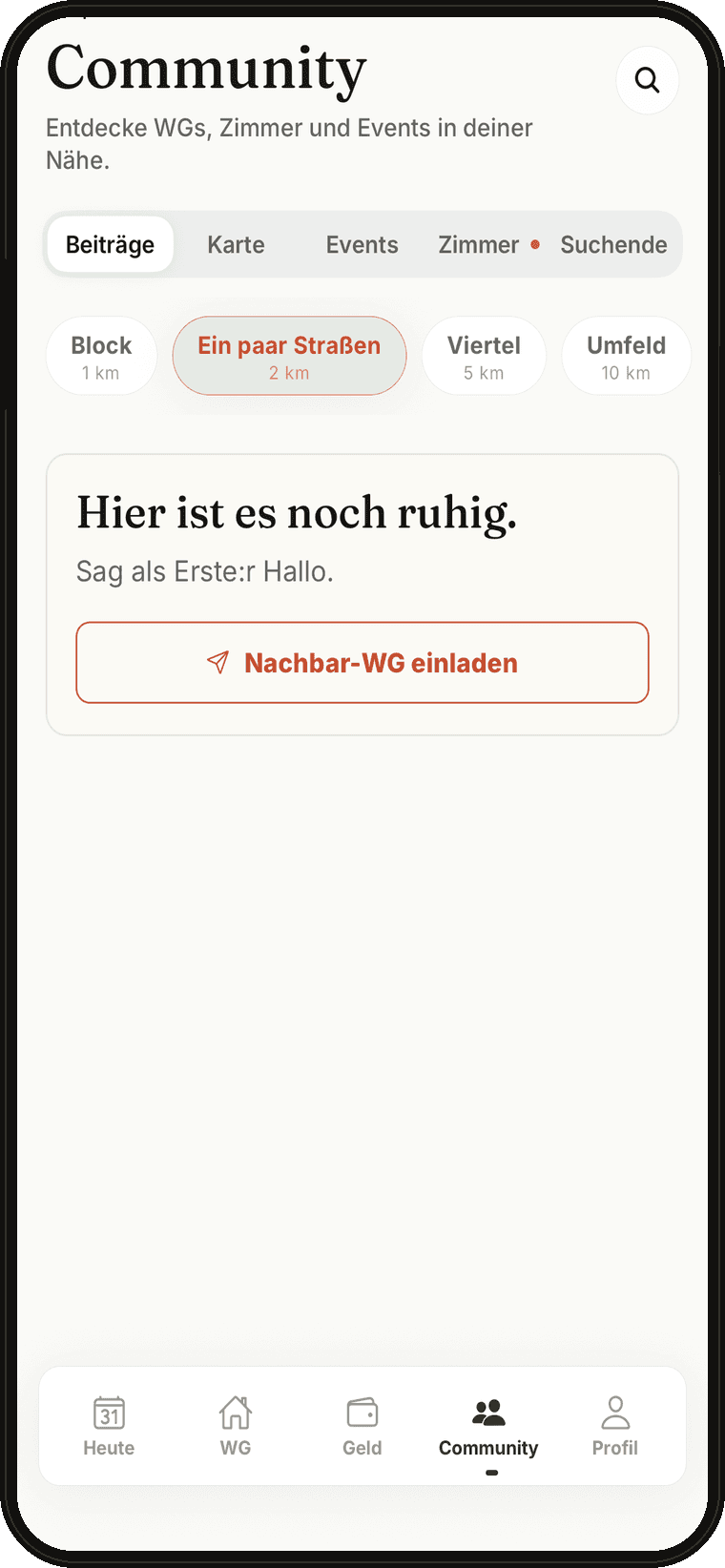
These are real artifacts copied from the WGTakt project archive: onboarding, Today, House, Money, house chat, and expense flows.
WHY IT EXISTS
FOUNDER NOTE
The frustration was specific. A calendar worked until people were away. A chore app worked until schedules changed. The house needed a system that understood presence, due windows, fairness, reminders, and the social cost of someone forgetting something.
The WhatsApp bot was the proof. It sent task reminders, accepted natural replies, understood when someone was unavailable, routed skip/rescue behavior, and answered household questions. When Meta's WhatsApp approval path became the wrong operating model for a small product, the same logic moved into a real app.
Maria and Varun then turned the bot lessons into product surfaces: one-press starter chores, rolling tasks, linked dishwasher chains, rich notification actions, WG events, house chat, community, room listings, and shared decision loops.
JOURNEY
FROM BOT TO APP
The house problem
The idea started inside a real Weiden WG. Calendars worked until vacations, busy weeks, missed due dates, and changed schedules made them brittle. Flatastic helped for a month, then failed the same adaptability test.
The WhatsApp bot
The first real build was a Baileys-backed WhatsApp bot with GPT routing and an Express/Postgres backend. Registered roommates could answer reminders with done, later, unavailable, skip, rescue, or finance questions in natural language.
Backend truth
The bot proved that the hard product was not chat. The hard product was the household state machine: chores, assignments, availability, reminders, rescues, strikes, finance, settlements, and an event log that everyone could trust.
Mobile product
The new WGTakt repo moved to Expo React Native, TypeScript API, shared contracts, and a guarded Postgres schema. Onboarding, Today, House, Money, Profile, push actions, deep links, and community surfaces became the main app.
Launch hardening
Work shifted into production gates: scheduler/outbox reliability, push receipts, physical-device QA, store assets, API contracts, community feed/listings/events, room applications, and backend scale fixes.
WHAT GOT BUILT
SYSTEM LAYERS
Rolling chores
Trash and similar duties do not repeat blindly. The next turn is created after completion, then spacing adapts when people are away or the house has lower presence.
Linked chains
Run dishwasher and empty dishwasher are a chain, not two unrelated chores. One action triggers the next with different timing, then loops back into the next run.
Fairness planner
The planner uses weighted chore points, schedule blocks, quiet hours, availability, duplicate guards, and owner strategies instead of naive round-robin assignment.
Durable notifications
Push, email, and in-app notifications are database records first. Provider failures update delivery state without corrupting the assignment lifecycle.
House memory
The event log, house chat cards, activity receipts, undo flows, weekly recap cards, and exports make household history inspectable instead of dependent on memory.
Community layer
After chores and money, the model expands into WG pages, nearby events, room listings, marketplace posts, applications, group chats, moderation, reports, and blocks.
DB HISTORY
POSTGRES AS MEMORY
Tenant core
users, households, household_members, invitations, member_schedules, household_settings
Chores
chores, chore_eligible_members, assignments, assignment_steps, scheduler_locks, scheduler_cursors
Money
expenses, expense_shares, settlements, recurring_expenses, move_out_proposals
Notifications
devices, notification_outbox, push_receipts, reminder_activity_actions
Community
wg_pages, wg_locations, wg_photos, feed_posts, comments, likes, saves, follows
Rooms and events
wg_listings, listing applications, events, RSVPs, conversations, messages
The new repo deliberately separates the legacy database from the production schema. The production schema is multi-tenant from day one: household-owned rows carry household boundaries, scheduler/outbox rows are durable, and community state lives alongside household operations.
SCREEN EVIDENCE
CORE FLOWS
PRODUCT DIRECTION
FROM HOUSE TOOL TO WG NETWORK
SOURCE EVIDENCE
WHAT THIS PAGE IS BASED ON
Legacy bot
Express/Postgres backend, Baileys WhatsApp transport, GPT intent routing, deterministic guard rails.
Mobile repo
330 commits, 80 SQL table definitions across schema fragments, and production launch docs.
Visual QA
Simulator screenshots for onboarding, Today, House, Money, Profile, chat, expenses, and regression passes.
Launch state
Feature matrix is green for tenant/auth, first WG, chores/cadence, fairness, and money; device and production DB gates remain explicit blockers.