PROJECT / COST ARTICLES
Cost articles
The cost-article work looks like content. Underneath, it is an indexing, deduplication, calculator, and publishing-safety system.
A reusable pipeline that turned MyHammer Preisradar topics into mapped Digitaleseiten cost-guide candidates and drafts.
ACTUAL PROMPT / THREAD TRACE
when we started this project, 2 months ago. i asked you to create a directory for cost article based on MyHammer Preisradar...
WHY IT MATTERS
This is where Varun turned article production into structured operations: topics, verticals, duplicate scans, calculators, drafts, and annual refreshes.
HOW TO READ THIS
Each entry is a dated design decision: the pain point, the response, the proof source, and the visual artifact when the archive had one.
DATED JOURNEY
DATE INDEXThe catalog became a dataset
Before writing, Varun captured the universe of possible topics.
The MyHammer Preisradar seed became the stable input for the pipeline.
That seed turned a fuzzy SEO idea into a reproducible topic catalog.
data/preisradar_seed_2026-04-16.md and README.
Topics needed a vertical home
A keyword is useless until it knows where it should publish.
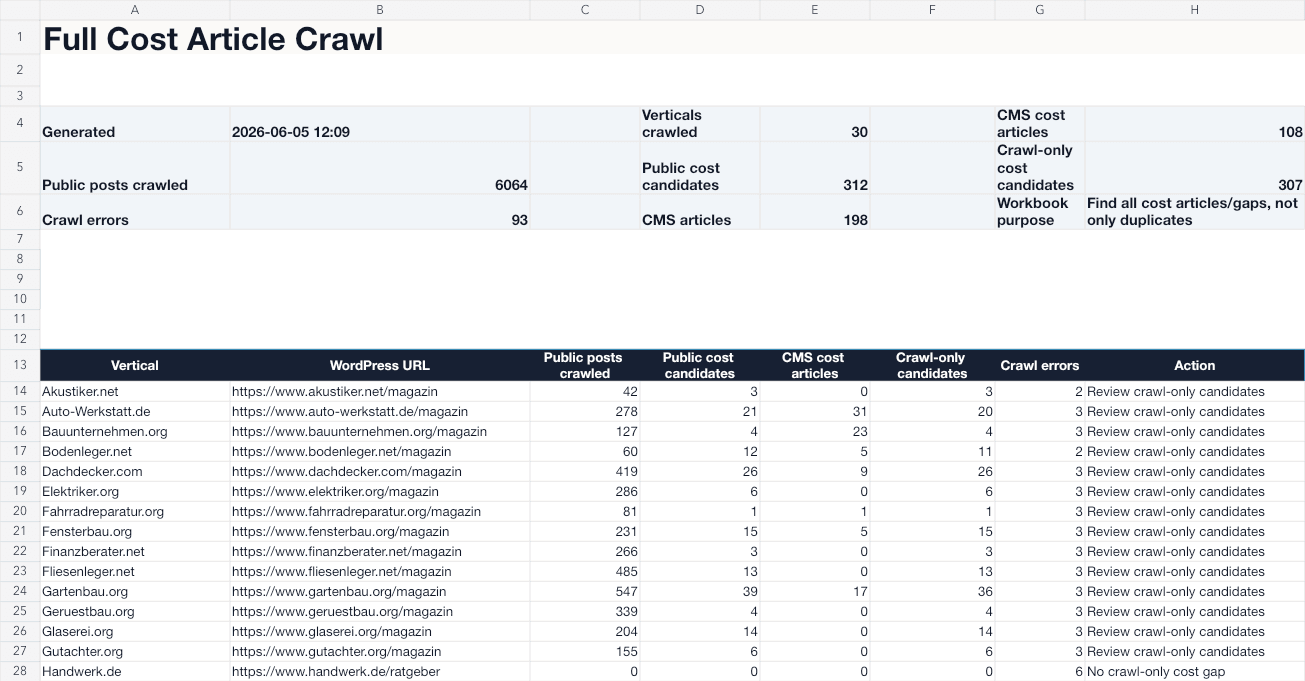
The pipeline mapped Preisradar topics onto Digitaleseiten verticals, grouping candidates by target domain.
That created 22 vertical packs and a workspace for review instead of one giant undifferentiated list.
workspace/by_vertical and article_candidates_by_vertical.md.
Drafts became inventory, not loose files
A hundred articles need operations, not vibes.
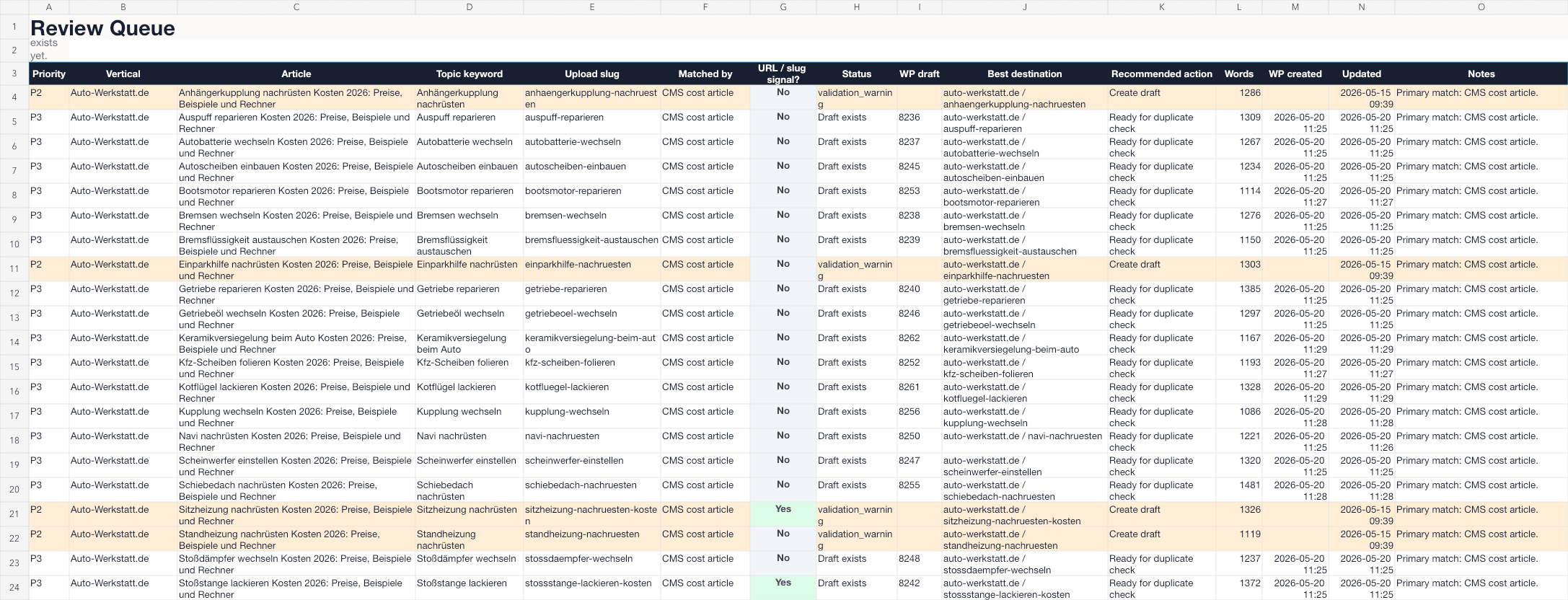
The project produced pending drafts across many domain folders and backups.
That structure made large-scale article production inspectable and recoverable.
articles/pending and articles/backups.
`covered` did not mean finished
The dangerous label is the one people misread.
A later thread clarified that `COVERED` meant the duplicate scan found a likely existing article, not that a new article was done.
That distinction matters because content operations fail when status labels collapse research, completion, and risk.
what does covered mean in this output/article_candidates_by_vertical.md
Cost article thread explaining duplicate_status=covered.
The numbers were not rankings
A tiny confusion can poison a whole editorial workflow.
The `Abbrucharbeiten | 0` style numbers were internal `source_id` values, not prices, volumes, or priorities.
The blog should keep this because it shows the real work: making the data legible before anyone acts on it.
what do these number mean Abbrucharbeiten | 0 ... Eternitplatten entsorgen | 8?
Cost article thread and parser reference.